Chediak Higashi syndrome (CHS) is a rare recessive autosomal disorder that damages all body systems but particularly immune system cells, leaving them less able to fight off bacteria and viruses. CHS is characterized by abnormally light pigmentation of the skin, hair, and eyes, known as oculocutaneous albinism. While the exact prevalence of this syndrome is unknown, fewer than 500 cases have been reported worldwide[1]. There are treatments like bone marrow transplants and Vitamin C therapy available; there is no specific treatment for CHS.
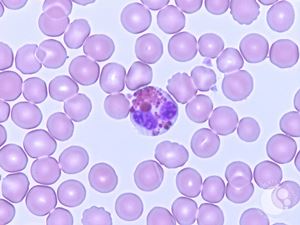
In 1996, researchers from Millennium Pharmaceuticals, led by Deborah L. Nagle, PhD, made a groundbreaking discovery in Chediak-Higashi syndrome. Through DNA isolation, they determined some mutations that cause CHS and found that CHS may be a heterogeneous disease, with multiple root causes rather than a single cause in all patients affected[2]. The same cell lines used in this study remain available today through Coriell’s NIGMS biobank for other scientists to continue using to advance critical research.
Since the founding of the NIGMS Human Genetic Cell Repository at Coriell in 1972, this biobank has been home to some of the world's most important cell lines, representing a variety of disease states, chromosomal abnormalities, and many distinct human populations. Coriell is also home to five other NIH-funded biobanks, distributes thousands of samples every year, and offers world-class research and biobanking services to scientists around the globe.
[1] https://www.ncbi.nlm.nih.gov/books/NBK507881/
[2] https://www.ncbi.nlm.nih.gov/books/NBK507881/
